July 9, 2025 – International Desk | PKH Lampung News
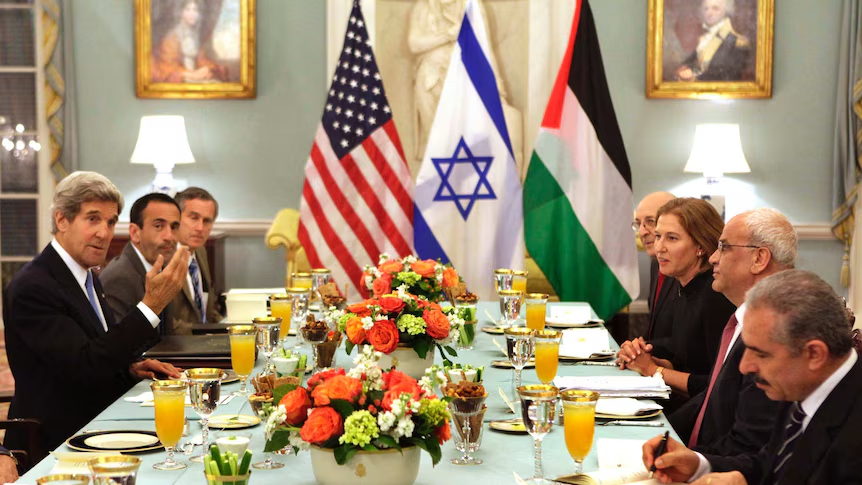
Recent diplomatic efforts in the Middle East have shown notable progress as high-level peace talks resumed this month involving key regional powers and international mediators. The negotiations, held in Geneva under the joint supervision of the United Nations and the European Union, aimed to reduce tensions and establish long-term stability in conflict-prone areas, particularly in Gaza, the West Bank, and northern Syria.
Key Agreements Reached
During the latest round of talks, several major developments were achieved:
- Ceasefire Reinforcement in Gaza:
Both Israeli and Palestinian representatives agreed to reinforce the existing ceasefire with a new framework for humanitarian access and reconstruction funding for Gaza. - Border Access and Aid Corridors:
Egypt and Jordan committed to facilitating cross-border humanitarian corridors, with UN monitoring, to ensure the safe delivery of aid and medical supplies. - Prisoner Exchange Framework:
A roadmap was laid out for a phased prisoner exchange between Israeli authorities and Palestinian factions, brokered by Qatar and Turkey. - Normalization Discussions:
Saudi Arabia and Israel continued quiet-track discussions on diplomatic normalization, with the US acting as a key intermediary.
International Reactions
UN Secretary-General António Guterres welcomed the progress, stating,
“Peace in the Middle East has always required courage and compromise. What we’re seeing now is cautious optimism backed by diplomatic action.”
The United States and EU also released joint statements urging all parties to maintain momentum and build trust through concrete action.
Challenges Ahead
Despite these positive steps, obstacles remain:
- Mutual distrust between some factions continues to threaten fragile truces.
- Internal political pressures in Israel and the Palestinian Authority may slow down implementation.
- Extremist groups not included in the talks could attempt to sabotage progress.
However, analysts note that this is the most tangible diplomatic movement since the Abraham Accords of 2020, and the first multilateral table that includes representatives from Syria, Iran, and Lebanon in over a decade.
What This Means for Global Stability
The ripple effect of peace in the Middle East could affect global energy markets, migration patterns, and geopolitical alliances. A successful framework could reduce the need for foreign military presence and allow rebuilding efforts to accelerate in war-torn zones.